
What Skipping Winter Prep Actually Costs You
Put this off again and the bill doesn't stay the same size — it grows. A spring that's been quietly corroding since July doesn't fail gently; it snaps, usually on the coldest morning of the year when metal is stiffest and you're in a hurry to get to work. A door that's been dragging on a rusted roller all fall can jump its track entirely once cold, dry air shrinks the wood or metal panel just enough to change the fit. What would have been a $150–$250 tune-up in November turns into a same-day emergency repair, a damaged panel, or a door that won't open at all. None of that is dramatic weather — it's just months of humidity damage meeting one cold snap.
The Real Seasonal Risk Here Isn't Snow — It's the Handoff from Wet to Cold
Jackson County doesn't get brutal winters, but it does get a hard swing: a long, humid hurricane season followed by sharp cold fronts and the occasional freeze. That transition is rough on a garage door. All that summer moisture has already done its work — rust on springs and hinges, swelling in wood panels and door frames, grit packed into tracks from afternoon downpours. Then a cold front drops temperatures fast, metal contracts, old lubricant thickens, and whatever was weakened quietly over the summer gets tested all at once. Getting ahead of it now, before the first real cold snap, is what actually prevents the failure.
Inspect the Springs Before the Cold Does It For You
Torsion and extension springs are under constant tension, and surface rust from humid months reduces their strength even if they still look like they're working. Cold temperatures make steel more brittle, so a spring that was already weakened is far more likely to snap once the weather turns. Look for flaking rust, gaps in the coils, or a door that feels heavier than usual when lifted by hand with the opener disconnected. Don't try to adjust or replace a spring yourself — the tension involved can cause serious injury. This is exactly what a spring inspection or repair visit is for.
Check Weatherstripping and the Bottom Seal
Cold mornings make gaps around the door obvious fast — you'll feel a draft at floor level, or notice condensation forming where warm garage air meets a cold door panel. Summer humidity swells rubber seals and can warp them out of shape, so a seal that worked fine in spring may have gaps now. Run your hand along the bottom seal and side weatherstripping looking for cracks, flattening, or sections pulling away from the track. A worn seal doesn't just let in cold air — it's also how wind-driven rain and small pests get in during storms.
Clear and Lubricate the Tracks and Rollers
Afternoon downpours all summer wash dust and grit straight into the tracks, where it mixes with old lubricant and turns into a gritty paste that grinds down rollers. Before cold weather sets in:
- Wipe down the tracks with a damp cloth to remove built-up grime
- Check rollers for flat spots, cracks, or rust pitting
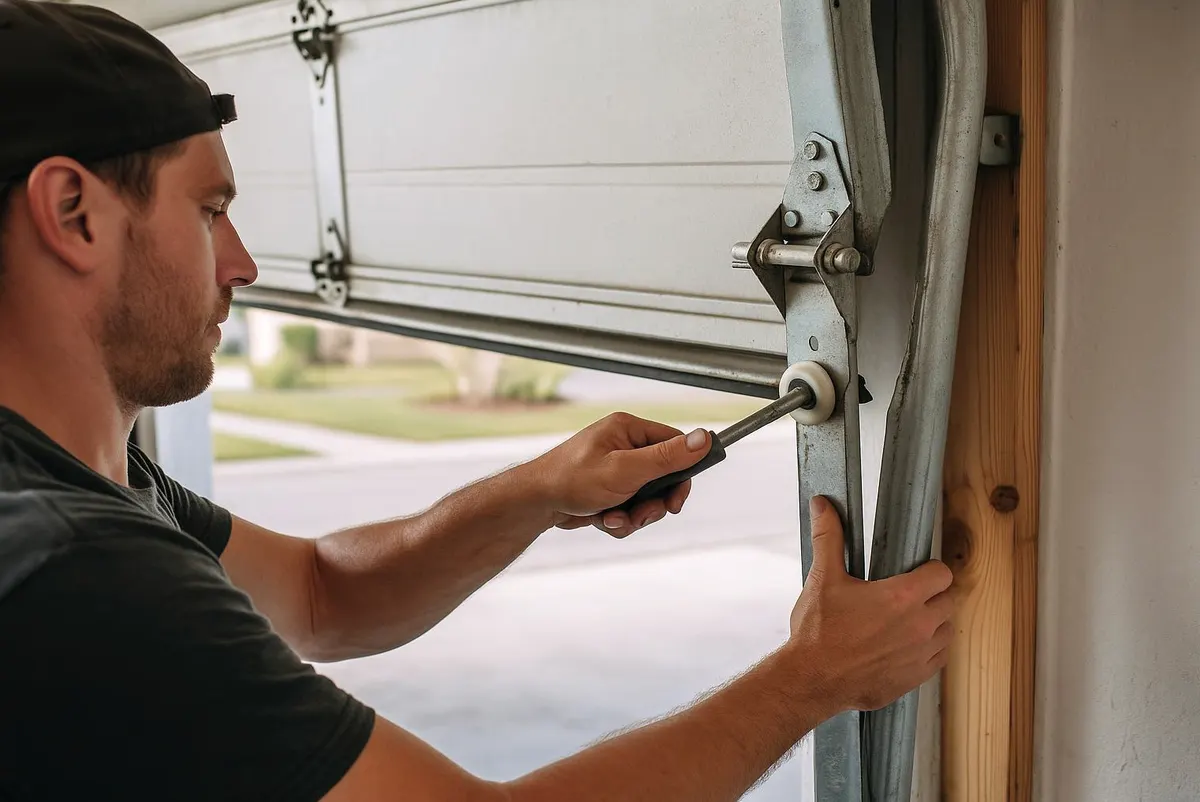
- Apply a silicone-based garage door lubricant to rollers, hinges, and the torsion spring — avoid heavy grease, which thickens in cold weather and attracts more dirt
- Tighten any hinge or track bolts that have worked loose
If rollers are worn or cracked, this is the point to replace them rather than wait — a failing roller is what eventually leads to a door jumping its track.
Tighten Hardware Loosened by Humidity Swings
Wood garage doors and door frames expand with summer humidity and contract as the air dries out heading into winter. That swelling-and-shrinking cycle works bolts and brackets loose over a season, even on steel doors where the frame or trim is wood. Walk the full perimeter and check that hinges, track brackets, and the opener's mounting hardware are all snug. A loose bracket under normal conditions becomes a real problem once a cold front brings gusty wind behind it.
Test the Opener and Backup Power
Humidity is hard on electronics, and a sensor or circuit board that's been slowly corroding may only show symptoms once temperatures drop and components contract. Test that the auto-reverse safety feature still works by placing a block in the door's path, confirm the remote and keypad respond promptly, and if your opener has battery backup, check that the battery still holds a charge — useful for both winter power blips and storm season outages.
When to Call Malone Garage Door Service
If you find rust on the springs, a door that feels unbalanced, grinding rollers, or an opener acting unpredictably, that's the point to bring in a technician rather than keep testing it yourself. Our Garage Door Maintenance & Tune-Up service covers a full inspection of springs, cables, rollers, and hardware, catching the kind of hidden wear that a cold snap would otherwise expose the hard way. If a spring has already failed or rollers are too worn to adjust, our Garage Door Spring Repair and Cable & Roller Replacement services get the door back to full strength before winter weather puts more strain on it.
If your garage door has been dragging, squealing, or showing rust since hurricane season, call Malone Garage Door Service today and get it checked before the next cold front rolls through Malone, FL.